
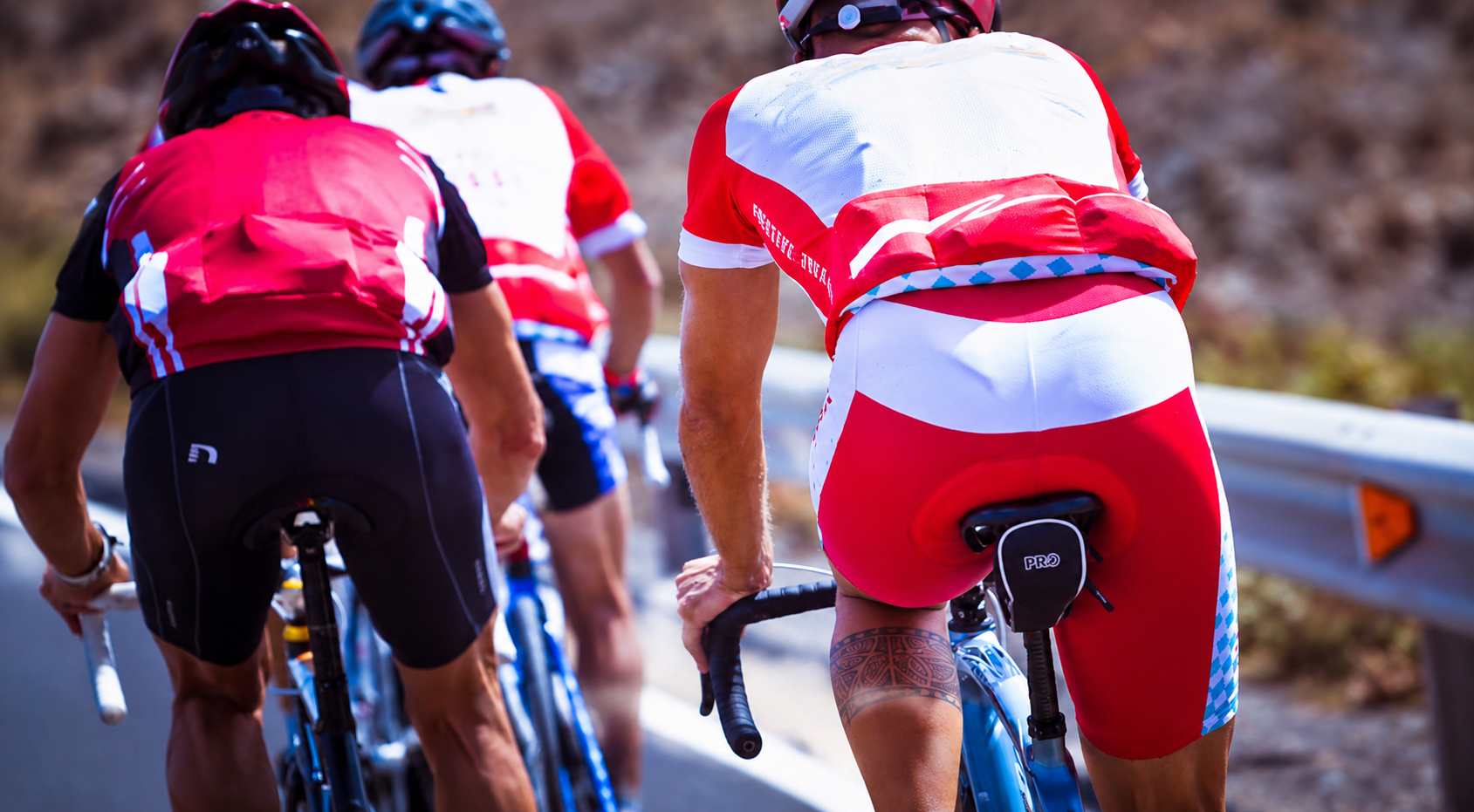
Why do amateur cyclists travel hundreds or even thousands of kilometres to take part in an event? The answer goes well beyond a race number. The journey can combine a sporting challenge with landscape, social connections, leisure and a short holiday. Research into cycling events helps explain these motivations, although it does not justify treating every cyclist as the same kind of tourist.
More than a starting line
For many amateur riders, an organised event gives shape to the trip: a date to train towards, a route that would be difficult to experience independently and a chance to share the challenge with others. The event may be the reason for choosing a destination, but the experience extends to accommodation, restaurants, transport, local services and sometimes additional days of riding.
Research on the Mallorca 312 has examined the relationships between event experience, destination attributes and the intention to return. Its findings draw attention to elements such as scenery, lifestyle and social interaction. They suggest that organisers and destinations need to think about the complete visitor experience, not only the competition itself.
Motivation is not the same as spending
Research into cycling tourism in the Balearic Islands explores how different motivations relate to travel behaviour, expenditure and length of stay. That distinction matters. A participant who travels with friends for a weekend may spend differently from someone who brings their family or stays for a week of training. There is no sound basis for multiplying an average spending figure by every entrant without checking who travelled, for how long and what they actually spent locally.
A study of the Ibiza BTT event also points to practical factors in choosing an experience, including route signage, weather and travel costs. A destination may have spectacular scenery yet lose potential visitors if access, prices or the event experience do not meet expectations.
The economic opportunity for destinations
The opportunity is broader than entry fees. Cycling visitors can create demand for accommodation, restaurants, transfers, bike rentals, repairs, guiding, training camps and other services. Events may also help bring visitors outside the traditional holiday peak. This is an economic opportunity, not proof that every event generates a positive net return.
To assess the real value of an event, a destination should distinguish visitors from local participants, measure nights stayed and spending within the area, identify expenditure that would have happened anyway, and account for organisational costs and possible displacement of other visitors. Gross spending, local economic impact and profit are not interchangeable.
A market worth understanding, not exaggerating
The growing variety of gran fondos, mountain-bike events, training camps and self-guided cycling holidays illustrates the different ways cycling and travel intersect. But these are not identical markets: touring cyclists, recreational holiday riders and amateur competitors have different needs and spending patterns. Evidence from one event cannot automatically be applied to an entire country.
For destinations, the most useful question is not simply how many riders cross a finish line. It is how many travel specifically for the event, what else they do, how long they stay, what makes them return and whether the benefits reach the local community. Answering those questions rigorously is how sporting events can become part of a sustainable tourism strategy.
Research and sources
- Journal of Outdoor Recreation and Tourism (2023): research on Mallorca 312 and return intentions.
- Tourism Economics (2018): cycling tourists’ motivations and travel behaviour in the Balearic Islands.
- Tourism Management Perspectives (2020): motivation and segmentation among Ibiza BTT participants.
- Sustainability (2019): motivations of amateur cycling-event participants.
Editorial note: these studies examine specific samples and events. They do not provide a single universal estimate of cycling tourism’s economic impact. This article deliberately avoids unverified market-size claims.